









Hand Crushed in Tissue Rollers: What a £60,000 Factory Fine Tells You about Cleaning Live Machinery
0800 652 0586
By David Healey, Senior Solicitor | Accidents at Work | May 2026
QUICK ANSWER
“My hand got crushed clearing a blockage on a machine at work. A colleague was running it slowly while I reached in. Do I have a claim?”
Yes. In almost every case like this, the employer is at fault in law, not the worker.
- The law: The Health and Safety at Work Act 1974 puts the duty to provide a safe system of work on the employer, in England and Wales. The duty includes proper training and isolation procedures for any cleaning task on live machinery.
- Who pays: Compensation comes from the employer’s liability insurer, not the company itself. Bringing a claim is protected from retaliation in law and does not put the company at financial risk.
- The deadline: Three years from the date of injury under the Limitation Act 1980. Cases are easier to pursue when evidence is gathered close to the event.
The first call is free, takes around fifteen minutes, and gives an honest answer on whether the case is worth pursuing.
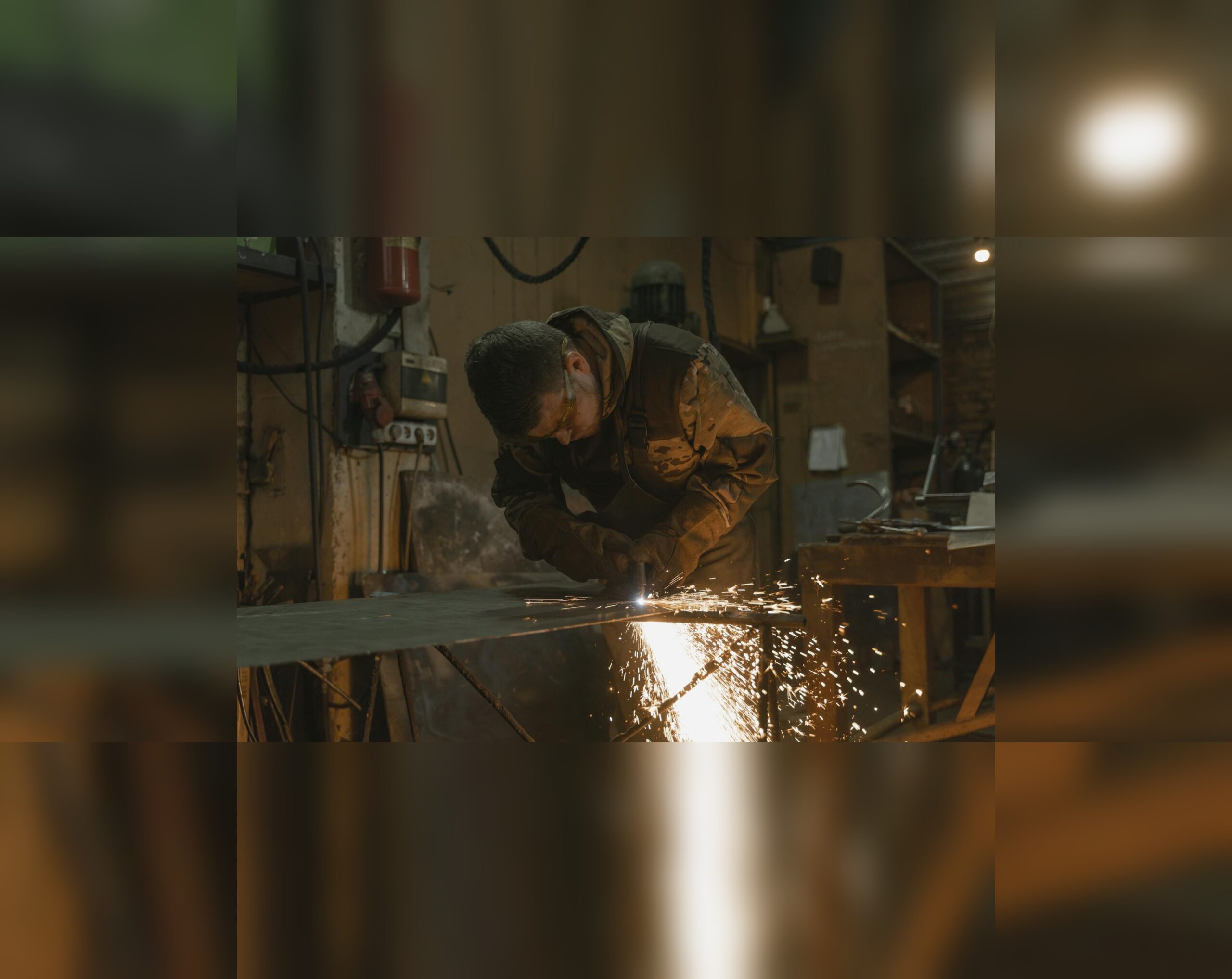
A 24-year-old lead machine operator went to clear a tissue blockage on a manufacturing line at a factory in Lancashire. He asked a colleague to “jog” the machine forward in tiny increments while he reached in to free the jam. The rollers caught his right hand. The crushing injuries were serious enough that the matter ended up in front of Burnley Magistrates’ Court.
On 29 April 2026 the company that ran the factory was fined £60,000 plus £5,107 in costs after pleading guilty to a breach of the Health and Safety at Work Act 1974. The Health and Safety Executive prosecutor told the court there was no safe system of work for the task. There were no proper instructions. There was no training that would have stopped a worker from putting his hand into a machine that was still capable of moving.
If something similar has happened to you, this case matters. Not because the company has been punished, although that is part of it, but because the legal reasoning the court applied is the same legal reasoning that decides your own civil claim for compensation. Worth understanding what that reasoning actually is.
I “jogged” the machine the way I always have. Was that on me, or on my employer?
“Jogging” or “inching” is when you energise a motor in tiny pulses, only while a button is held down. It is the way operators across British manufacturing have for decades cleared blockages without fully shutting the line down. It feels controlled because the machine moves in small, predictable steps. It feels safer than full power. It is not.
The reason it is not safer is that the machine is still energised. The rollers can still catch a glove, a sleeve, or a finger and pull a hand in faster than the operator can release the button or pull back. That is exactly what happened in this case. It is also exactly the failure mode the Provision and Use of Work Equipment Regulations 1998 were drafted to prevent.
In law, the question is not whether you held the button or whether you reached in. The question is whether your employer provided you with a safe way of doing the task that you were paid to do. If the only way to clear a blockage was to put a hand near a moving roller while a colleague jogged the motor, the system of work was unsafe. The legal failure is the employer’s, not yours.
WHAT WE SEE IN PRACTICE
The way the task is described in the risk assessment is often the strongest piece of evidence in your favour.
When workers in machinery cases ask Carter and Carter to investigate, the document the firm requests first is usually the risk assessment for the cleaning or unblocking task. Two patterns recur. The first is that the risk assessment is generic, copied from a template, and does not mention the specific machine. The second is that the risk assessment was written but never trained out to operators, so the people doing the job never knew the documented procedure existed. Either pattern strengthens your claim materially. Neither pattern is your fault.
What does the law actually say about cleaning a machine that’s still energised?
Four pieces of law apply directly. Each one sits on the employer, not the worker. Together they form the basis on which the company in this case was fined, and the basis on which a civil compensation claim by the injured worker would succeed.
Health and Safety at Work Act 1974, s.2(1)
The general duty. Every employer must, so far as is reasonably practicable, ensure the health, safety and welfare at work of all employees. The defendant company pleaded guilty to breaching this section.
PUWER 1998, regulation 11
Dangerous parts of machinery. Employers must take measures to prevent access to any dangerous part while it is in motion. Rollers in motion that can catch a hand are a textbook example.
PUWER 1998, regulation 19
Isolation from sources of energy. Where appropriate, work equipment must be provided with suitable means to isolate it from all sources of energy before any cleaning or maintenance work is carried out.
Management of Health and Safety at Work Regs 1999, reg. 3
Risk assessment. The employer must assess the risks to which employees are exposed at work and put suitable control measures in place. Generic risk assessments fail this test.
The prosecution was brought under section 2(1) of the 1974 Act, the simplest of the four. The civil claim that follows from the same incident draws on all four together. The compensation a court would award the injured worker is decided on the same evidence that produced the criminal fine, but with a lower standard of proof. If the company has admitted breach of section 2(1) on a guilty plea, the civil claim is materially easier to win.
In this case the HSE investigation found that tissue blockages happened around two to three times a day at the factory. The unblocking task was a routine part of the work. Yet no formal procedure had ever been written for how to do it safely with the machine isolated. A risk assessment dating back to 2021 had identified that very gap and recommended formal safe operating procedures. The company never put those procedures in place. By the time the worker reached into the energised rollers, the legal failure had been sitting on the employer for three years.
I’m in my early twenties. Does my age change anything about my claim?
It can strengthen it. Younger workers are explicitly recognised in the Management Regulations as a group whose risk assessments require particular attention. The reasoning is simple. Lack of experience is itself a risk factor. The duty on an employer to instruct, train, and supervise is heightened where the worker is young, new to the role, or both.
The duty under the Management Regulations runs in the opposite direction to common workplace assumption. The less experience a worker has, the more the employer is required to do. Specific procedure documents must exist for the specific task. Training must be provided and recorded. Supervision must be present where the procedure is being learned. None of those duties shift to the worker because they are willing or capable. They sit on the employer.
If you are in your twenties and were injured doing a task that nobody had walked you through properly, your age is part of the legal picture, not a weakness in your claim. The legal duty owed to you is, if anything, higher than the duty owed to a fifty-year-old veteran of the same factory.
“Greatly satisfied with the efficient service and was kept well informed at all stages of the claim process.”
Mr A McConville, Tyne & Wear · machine injury at work, case previously turned down by other solicitors
How does a £60,000 fine on the company affect my own claim?
The fine and your compensation are two different things. A common worry, when people see a news story like this, is that the fine has somehow “used up” the legal action and there is nothing left for them. The opposite is true. The criminal fine and the civil claim run on separate tracks, and the criminal outcome usually helps the civil claim.
The criminal fine
Brought by: the Health and Safety Executive.
Standard of proof: beyond reasonable doubt.
Money goes to: the public purse, not the worker.
Purpose: punishment and deterrence.
Your civil claim
Brought by: you, against the employer’s insurer.
Standard of proof: balance of probabilities.
Money goes to: you, for pain, lost earnings, treatment.
Purpose: compensation.
In practice the firm’s solicitors use the published HSE prosecution as evidence in the civil claim. A guilty plea to a section 2(1) breach is, in plain terms, the company already admitting the legal failure that caused your injury. The civil claim is then about establishing what the injury cost you, in money and in life, and recovering that.
“There was no safe system of work in place for the task.”
Emily Osborne, HSE Principal Inspector, speaking after the hearing · HSE press release, 30 April 2026
Which kind of work injury fits your situation?
Machinery accidents take many forms. The legal principles are similar but the medical evidence and compensation ranges depend on which part of the body was hurt and how. These are the most relevant pages.
What if I just want to keep my job and not make a fuss?
This is the most common reason workers wait too long to take advice, and it is the reason this paragraph is here. Bringing a personal injury claim is not the same as falling out with your employer. The claim is paid by the employer’s insurer, not by the company itself. Most employers expect a claim after a serious accident and have insurance specifically to cover it. Treating an employee badly because they have made a claim is unlawful and gives rise to a separate employment law remedy.
In a unionised workplace, your rep will usually support a claim. In a non-unionised workplace, the practical position is the same: the insurer pays, the company carries on, and your relationship with your manager need not change. The factory in this case will continue trading. The injured worker’s claim, if it has been brought, will be paid out of insurance.
The other concern that comes up is cost. Carter and Carter’s published fee is 10 percent of compensation when the claim settles without court proceedings. There is nothing to pay upfront. There is nothing to pay if the claim is unsuccessful. The first call costs nothing and takes around fifteen minutes.
No Win No Fee. What Carter and Carter charges
10%
When the claim settles without court proceedings. This applies in approximately 99% of claims the firm handles.
25%
Only if court proceedings become necessary. Capped at 25% of compensation, in line with the regulatory ceiling.
What should I do if this sounds like what happened to me?
Five practical steps, in the order they tend to matter.
First, if you have not already done so, get the injury recorded in the accident book at work. The entry does not need to be detailed. Date, time, location of the machine, the task being performed, what happened. Keep a photograph of the entry on your phone.
Second, get medical evidence in writing. Whether that is the A&E discharge summary, the GP letter, the occupational health note, or all three, ask for copies. Treatment notes are the spine of a personal injury claim.
Third, write down what you remember about the task while it is fresh. The exact words used by the colleague who was jogging the machine. Any prior near-misses you witnessed. Whether anyone had ever shown you a written procedure for clearing a blockage. Names of two or three colleagues who saw the accident, even if they have since left.
Fourth, if there is union representation in your workplace, tell your rep. They cannot bring the claim for you but they can secure documents you might not get otherwise.
Fifth, take legal advice promptly. The three-year limitation period under the Limitation Act 1980 sounds long. Cases are easier and more accurately valued when evidence is gathered while it is still close to the event.
Related guides
Hurt cleaning a machine at work? Speak to David or Chris directly.
No call centre. No upfront cost. The first conversation takes about fifteen minutes and is free.
About the author
David Healey is a Senior Solicitor at Carter & Carter Solicitors in Whaley Bridge, Derbyshire. Qualified in 2005, David has spent over 21 years helping people injured at work and in public places. Accident at work claims are one of the firm’s four specialist practice areas. Carter & Carter is one of very few firms in England and Wales to publish its fee structure upfront and to handle every claim personally at senior solicitor level from start to finish. More about the team ›